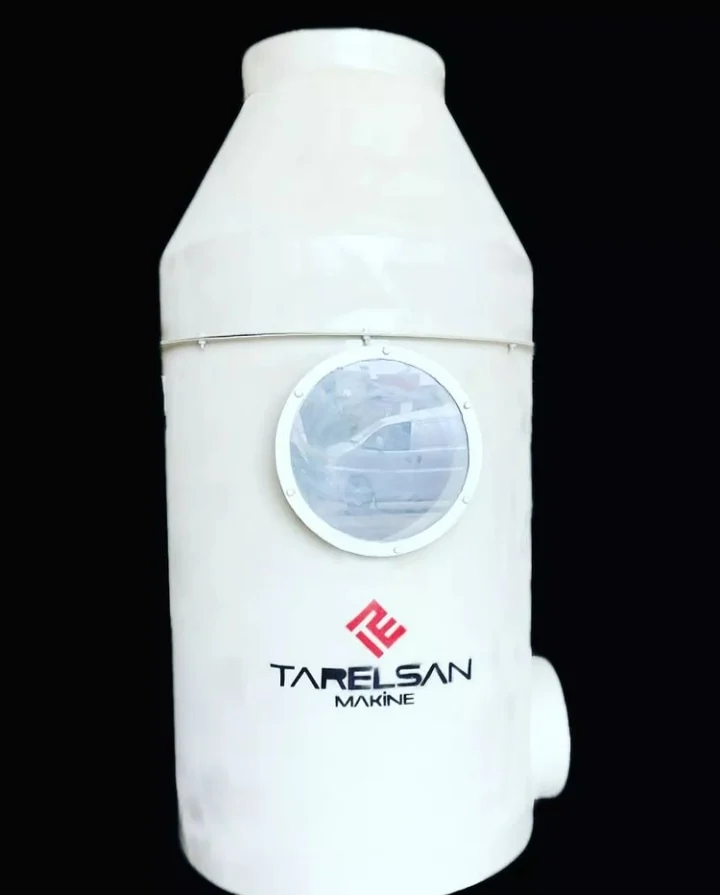
Scrubber Systems
Gas scrubbing systems designed around process conditions to transfer target contaminants from the gas stream into a suitable scrubbing liquid.
How does it work?
Contaminated gas is brought into contact with scrubbing liquid. Target compounds enter the liquid phase through dissolution or a suitable chemical reaction. Contact arrangement, liquid chemistry, circulation and mist elimination are assessed together.
- Gas intake
- Contact with scrubbing liquid
- Mist elimination and outlet
Applications
- Suitable acidic or alkaline gas streams
- Chemical process exhausts
- Odour control applications with known compositions
Key approach
- A process approach tailored to the target contaminant
- Controlled gas–liquid contact
- Material selection based on process chemistry
- PP housing option matched to process chemistry
The right choice starts with the right data.
The following information is assessed together when selecting a system. Airflow, power, dimensions and performance values are determined for each project.
- Gas composition, concentration and temperature
- Liquid chemistry and control requirements
- Corrosion, maintenance and waste liquid management
Application note
Gas removal depends on contaminant solubility, chemistry and contact conditions. A single scrubbing solution is not suitable for every gas.
Frequently asked questions
Are wet filters and scrubbers the same?
Both may use wet treatment. Here, wet filters focus on particles, while scrubbers focus on absorption or chemical removal of target gases.
What process information is needed for a quote?
Please provide gas flow, temperature, contaminant composition and concentration, installation space and available utilities together.