
Heat Recovery Units
Units that recover thermal energy from exhaust air through a suitable heat exchanger, helping reduce ventilation energy requirements.
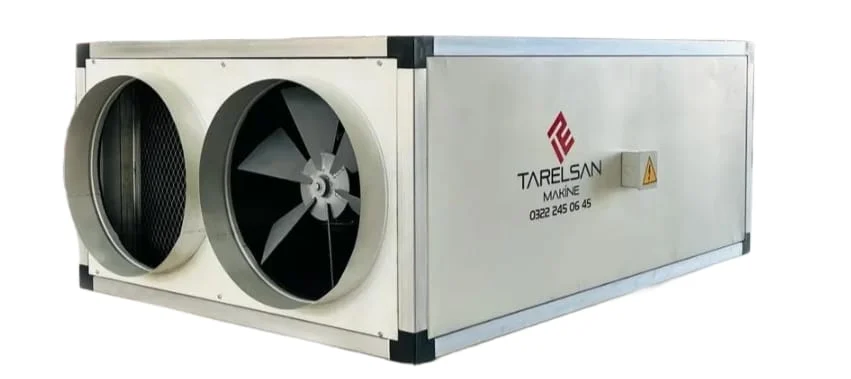
How does it work?
Exhaust and supply air pass through separate channels in a plate heat exchanger, helping preheat fresh air in winter and precool it in summer. The unit can provide fresh air alongside split or variable-refrigerant-flow systems. Heat passes between the air streams; fan electricity consumption is included in the total energy assessment.
- Hot and cold air streams
- Heat transfer in the exchanger
- Pre-conditioned air
Applications
- Fresh air and exhaust systems in facilities
- Waste heat recovery in suitable processes
- Reduction of heating and cooling loads
Key approach
- Recovery of energy from exhaust air
- Contribution to fresh air pre-conditioning
- Design integrated with the ventilation system
The right choice starts with the right data.
The following information is assessed together when selecting a system. Airflow, power, dimensions and performance values are determined for each project.
- Inlet and outlet temperatures, airflow balance
- Air contamination, condensation and freezing risks
- Heat exchanger pressure loss and maintenance conditions
Application note
The amount of heat recovered depends on operating conditions. For contaminated process air, exchanger protection and cross-contamination risks require separate assessment.
Frequently asked questions
How much energy does it save?
No single percentage applies to every installation. Savings are calculated by assessing airflow, temperatures, operating hours and fan energy requirements together.
Can it be used with contaminated exhaust air?
Depending on the contaminant, pre-filtration, a different exchanger arrangement or a separate fluid circuit may be required. Suitability is determined for each process.